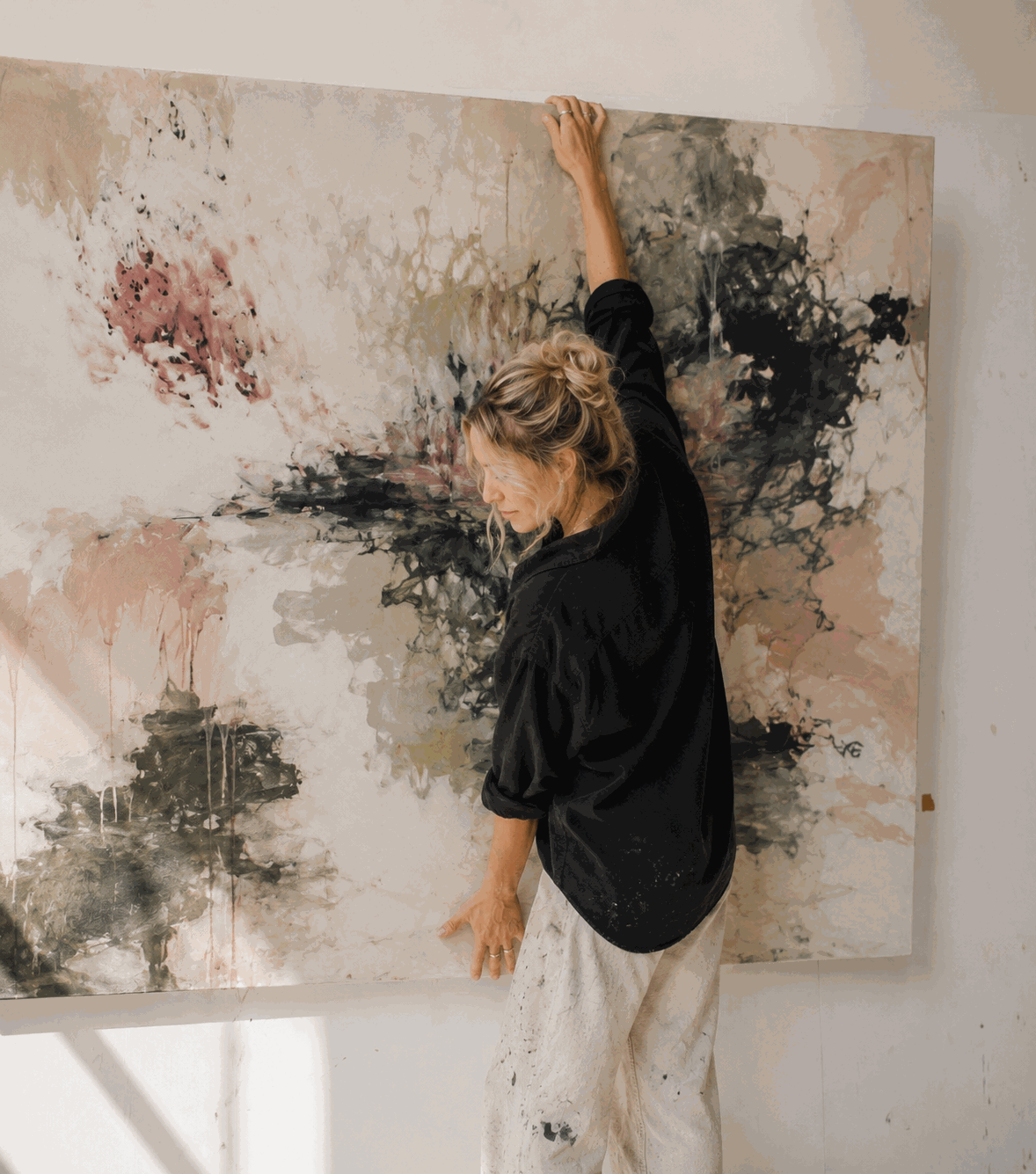


Abstract art is one of the most searched, most misunderstood, and most collected categories in the art world. Walk into any serious collection and you'll likely find it anchored by at least one abstract piece — not because it's trendy, but because abstraction does something representational art can't: it lets colour, form, and gesture speak before the mind has time to name what it's looking at.
This guide breaks down what abstract art actually is, where it came from, and what to look for if you're considering it for your own collection.
What Is Abstract Art, Exactly?
Abstract art is work that doesn't attempt to represent an accurate depiction of visual reality. Instead of a recognisable object, landscape, or figure, an abstract painting uses shapes, colour, line, texture, and composition to create an effect, emotion, or idea.
That doesn't mean abstract art is random. The best abstract work is built with the same discipline as any representational painting — it's just organised around feeling and structure rather than resemblance. A collector looking at an abstract canvas is responding to balance, rhythm, and tension in the same way a listener responds to music: there's no "subject," but there's absolutely a language.
Abstract art typically falls into a few broad approaches:
- Geometric abstraction — built from defined shapes, grids, and hard edges
- Gestural or expressive abstraction — built from movement, brushwork, and spontaneity
- Colour field — built from large, immersive planes of colour designed to be experienced rather than analysed
- Minimalist abstraction — stripped-down composition where restraint itself is the statement

A Brief History of the Movement
Abstract art emerged in the early 20th century as artists began breaking from centuries of representational tradition. Pioneers explored the idea that a painting didn't need to depict anything recognisable to carry emotional or spiritual weight. Over the following decades, the movement branched into distinct schools — from the geometric precision of European modernism to the large-scale, emotionally charged canvases that defined mid-century American painting.
What's remained consistent across a century of abstraction is the core idea: meaning doesn't require a subject. It can live entirely in how a piece is made.
Why Collectors Are Drawn to Abstract Art
Abstract work tends to hold a particular kind of staying power in a collection. A few reasons collectors consistently return to it:
- It's adaptable. Abstract pieces read differently depending on the room, the light, and the viewer's mood — which keeps the work feeling alive rather than static.
- It rewards proximity and distance. Many abstract paintings reveal texture and layering up close, then resolve into composition from across the room.
- It's a statement of taste, not just decor. Choosing abstract work signals confidence — it's a piece selected for how it makes you feel, not because it matches a sofa.
- Original and limited edition abstract pieces tend to be conversation starters, which matters if you're building a collection meant to be lived with and discussed.

How to Choose an Abstract Piece for Your Collection
There's no universal formula, but a few questions help most collectors narrow in:
- Does it hold your attention without a caption? If you find yourself studying it rather than glancing past it, that's a strong sign.
- What's the composition doing? Look at balance, movement, and where your eye is pulled first.
- Does the palette work with your space — or against it in a way you like? Abstract work can either anchor a room or intentionally disrupt it.
- Is it an original or a limited edition? Both are valid ways to collect, but they carry different considerations around exclusivity and long-term value.
Frequently Asked Questions
Is abstract art just "anything goes"? No. While abstract art doesn't depict recognisable subjects, it still relies on intentional choices around composition, colour theory, and technique. What looks spontaneous is often the product of significant skill and editing.
What's the difference between abstract and expressive art? Abstract art refers to the absence of a recognisable subject. Expressive (or expressionist) art refers to work — abstract or figurative — that prioritises emotional intensity over realism. The two overlap often but aren't the same thing.
How do I know if an abstract painting is "good"? Look at composition, use of space, and whether the piece feels resolved rather than accidental. Beyond technique, the most reliable measure is your own response: does it hold your attention, and does it still feel interesting after the tenth viewing?
Is abstract art a good investment? Original works and true limited editions — numbered, never reprinted, accompanied by a certificate of authenticity — tend to hold their significance within a collection over time. As with any art purchase, buying what genuinely moves you is the foundation; long-term value follows from scarcity, quality, and provenance.
Why is abstract art often more expensive than realistic paintings? Price reflects the artist's skill, reputation, originality, and the scarcity of the piece — not how long it took to paint or how "simple" it may look. A confident, resolved abstract composition is often the result of years of refinement.
Explore original abstract paintings and limited edition prints from the Artfables collection.