
There's a difference between decorating a room and collecting art, even though both can end with something hanging on a wall.
Decorating asks: does this fit? Collecting asks something else entirely: does this mean something to me? The first question can be answered by a colour swatch. The second can't be answered by anyone but you.
Art as a record of attention
Every piece you choose to live with is a small record of what you were paying attention to at the time — what caught you, what unsettled you pleasantly, what you kept returning to look at. Years later, a collection built this way reads less like a set of purchases and more like a timeline. You can often remember exactly where you were, and who you were, when a particular piece first stopped you.
That's not true of furniture. It's rarely true of anything bought purely for function. It tends to be true of art.

Why originals and true editions hold something reproductions don't
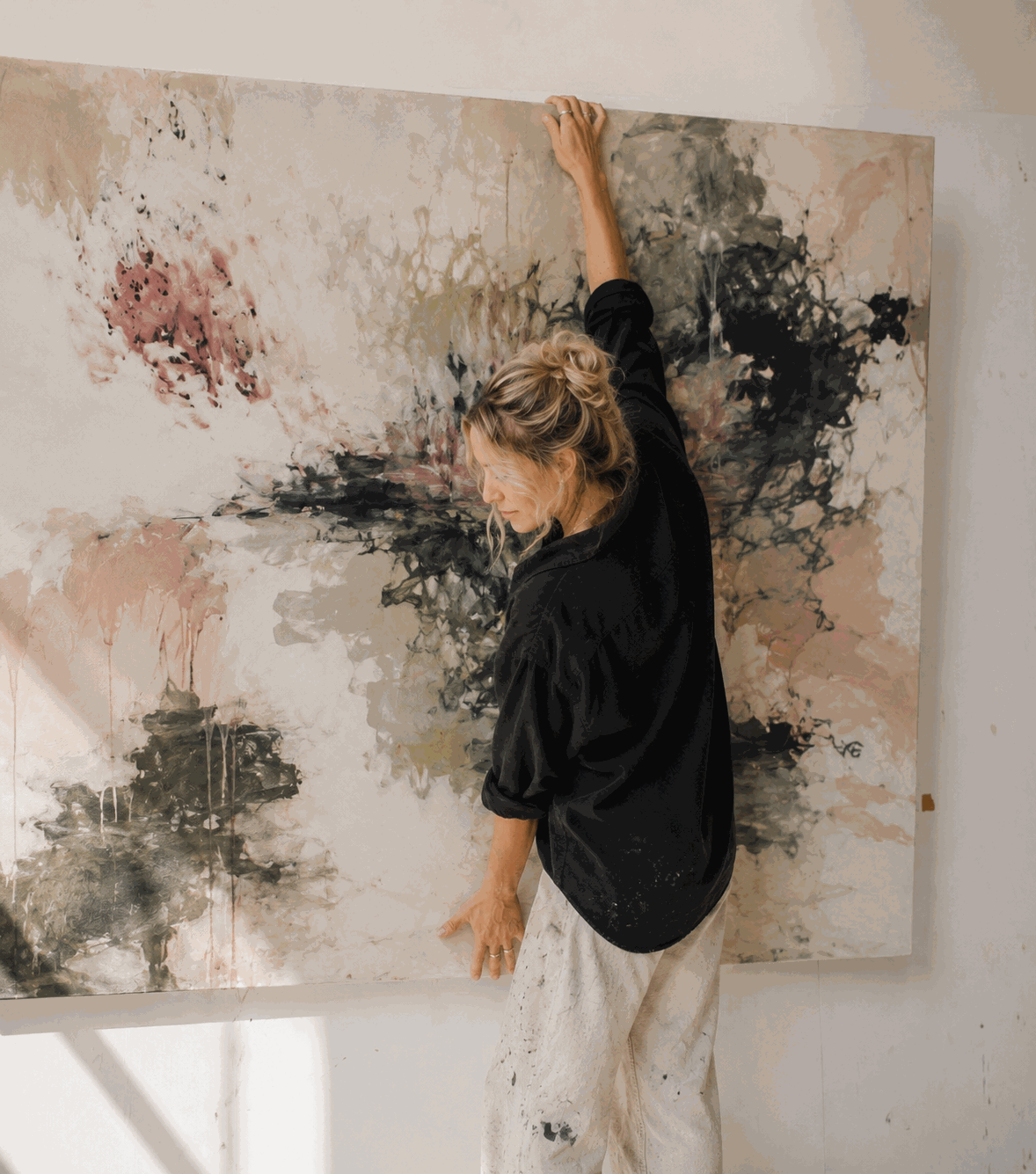
A mass-produced print, however attractive, was made to be interchangeable — one of an unlimited number, replaceable, disposable. An original work, or a print from a small, closed edition, carries something different: a decision. The artist made a finite number of choices about colour, mark, and composition, and then stopped. What you're looking at is the result of that specific stopping point, not an approximation of it.
Living with that kind of object changes how a room feels, in a way that's hard to describe and easy to notice. It's the difference between a space that looks finished and a space that feels considered.
Collecting slowly is not a compromise
There's a temptation to think that "real" collectors move fast, buy often, and fill walls quickly. In practice, the opposite tends to produce more interesting results. A collection assembled slowly — one piece chosen deliberately, given time, followed eventually by another — tends to hold together with a kind of coherence that fast collecting rarely achieves. Not because the pieces match, but because each one was actually chosen, rather than acquired.

A small, deliberate way of living
At its core, collecting art is a quiet argument against disposability. It says that some things are worth choosing carefully, keeping for a long time, and passing on eventually to someone else who will choose to keep them too. That's a modest kind of value, but it's a durable one — the kind that doesn't depend on trends, seasons, or what's currently being talked about.
It's simply the decision to live, deliberately, with things that were made to last.